Puglia Roadtrip
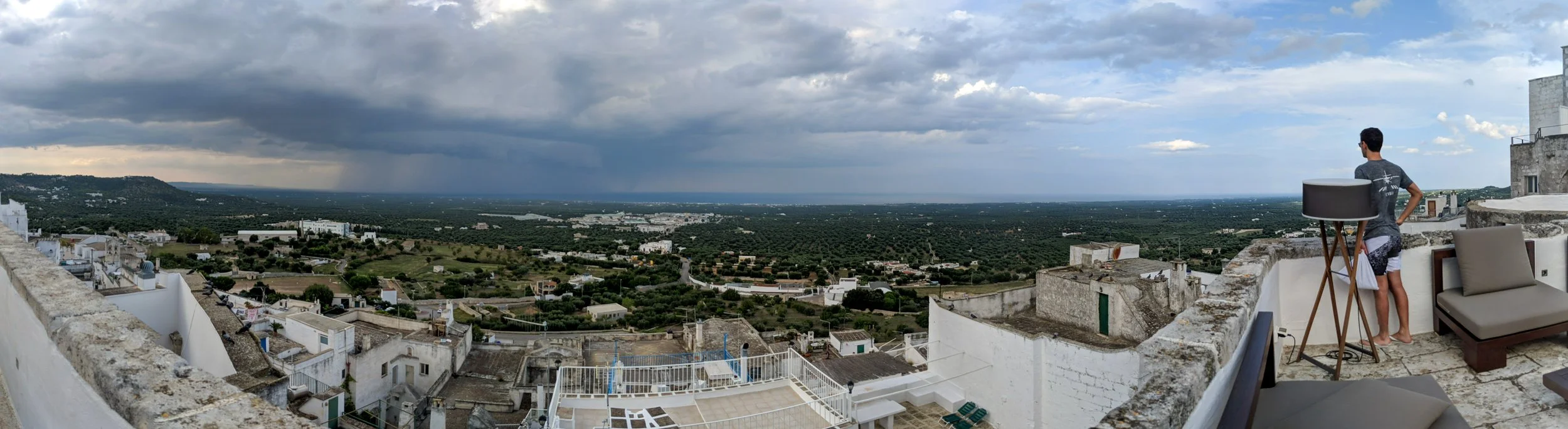
Ostuni
I associate Puglia with the time I was pregnant with my first child and I was 33 weeks pregnant. We decided to do a last minute baby-moon roadtrip around Puglia and have fond memories of being hugged by Puglian ladies, wishing me luck and happiness. It is an area of nostalgia, where you can still experience the best of what makes southern Italy special, the food, the architecture, the history and most of all its people.
These are the villages we visited and stayed at. If I had to do it all over again, I would love to return to these smaller villages and explore them further.
How to get here
You can arrive here through Brindisi or Bari airports. I recommend Brindisi if you are travelling by car and want faster access to Lecce and Solento beaches, and Bari if you would like to spend a day in its historic town and prefer to access locations by trains. From London, Easyjet and Ryanair fly to Brindisi, whereas you can fly British Airways to Bari.
Ostuni
Ostuni
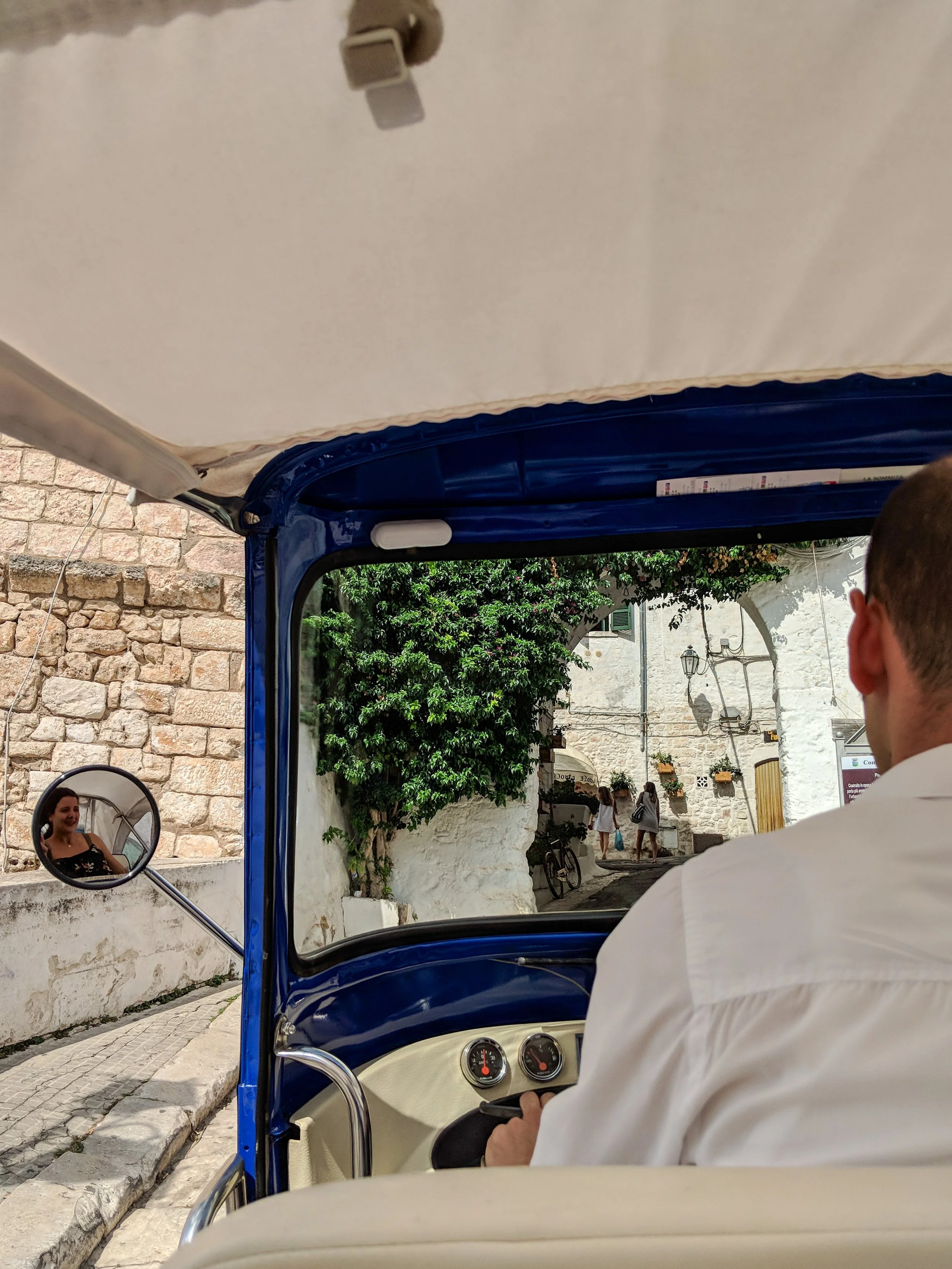
We drove straight from Brindisi Airport to Ostuni, where you cannot enter the city by car. We stayed at the lovely La Sommita Relais Chateaux and they picked us up from the city’s parking lot by electric tuk tuks, which makes for a striking first impression of Ostuni as you are driven through pedestrian crowds among the sea of white washed Gothic, Romanesque and Byzantine buildings surrounding you. Hidden behind the main church, a beautiful 16th century palace combines luxury accomodations and world renowned Puglian cuisine. From here you can access most of the historic sites by foot. By coincidence and pure chance, we came here on the last weekend of August when Festa di Sant'Oronzo takes place. It is held annually from August 25 to 27 and its main event is the Cavalcata di Sant'Oronzo on August 26, featuring knights in red and white riding caparisoned horses through the historic town’s streets. Walking without a map is the only way to experience Ostuni, take the day to walk its limestone stairways draped in bougainvillea, quiet courtyards scented with wild jasmine, and sudden openings along the ancient city walls that reveal sweeping views of the Valle d'Itria. Make sure to leave one dinner meal reserved at La Sommita’s restaurant as it was the highlight of our trip.
Behind the understated Spanish-Catalan portal of La Sommita lies a former private palace restored with simplicity. Stark white lime walls, natural linen textures, and centuries-old stone barrel vaults create an environment of profound quiet. Instead of heavy ornamentation, the property lets the shifting Mediterranean light and sweeping vistas over the ancient olive plain down to the Adriatic coastline take center stage.
The Terraced Gardens of Loggia Spagnola: A serene sanctuary of multi-tiered Spanish loggias shaded by orange and olive trees. Ancient stone cisterns and intimate plunge pools offer a cooling retreat after navigating Ostuni’s sun-drenched stairways.
Gastronomy at Cielo: The hotel’s Michelin-starred restaurant, Cielo, reinterprets Apulian coastal cuisine with technical precision—serving dishes infused with regional olive oils and local seafood in a dramatic, candlelit stone courtyard.
The Boutique Experience: With only a handful of exclusive suites, the atmosphere feels entirely private and unhurried. For families seeking an elevated base in the heart of the Valle d'Itria, it provides effortless access to local ceramic artisans and historical sites alongside the highest standard of Relais & Châteaux hospitality.
It is a sanctuary that captures the essence of slow Puglian living, where historical preservation and contemporary elegance effortlessly align.
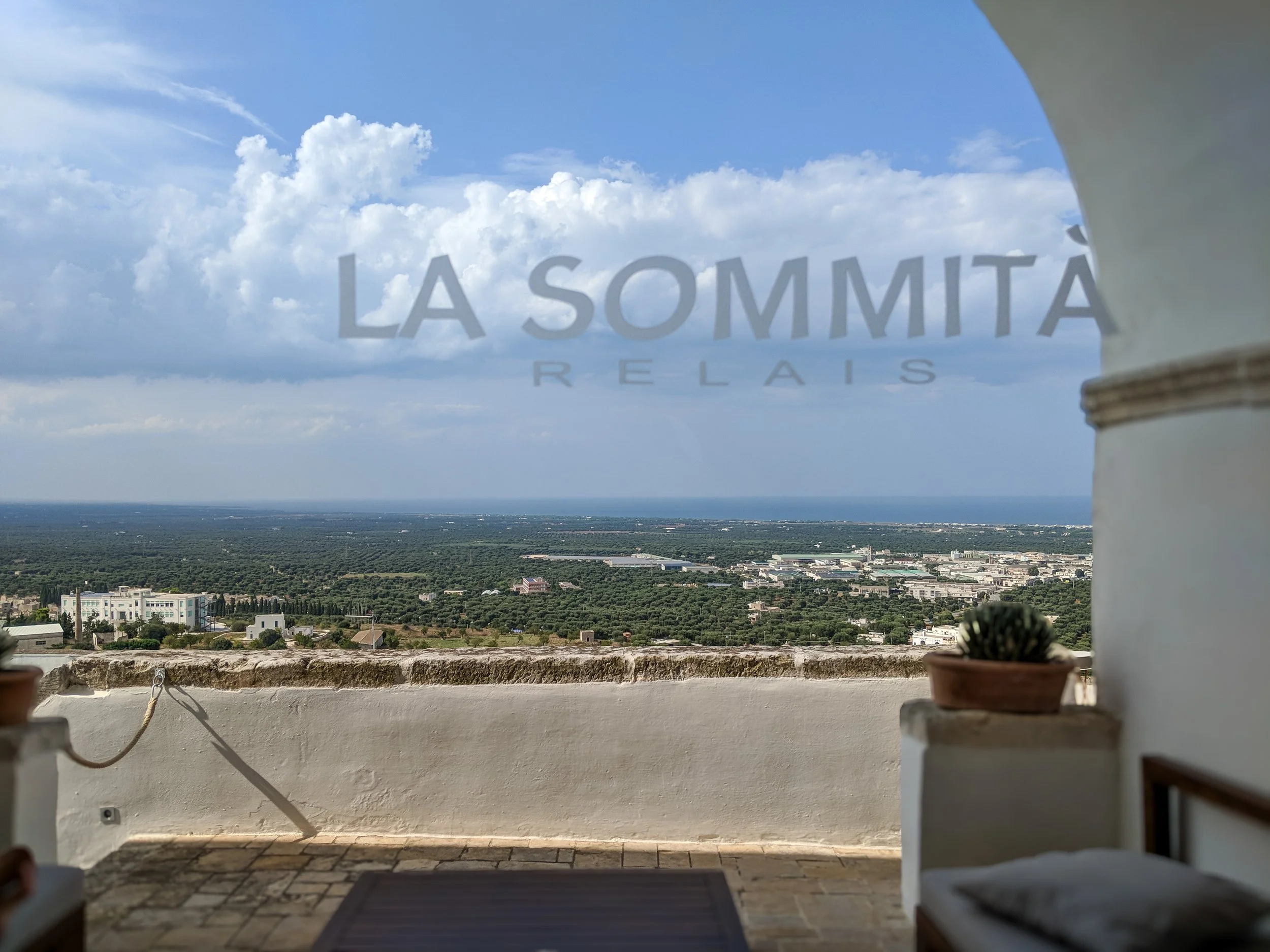
La Sommita Relais
Lecce
If you do only one city in Apulia, you should definitely go to Lecce. What I can only describe as stepping back in time to a place where you can still stroll through the old historic town withour hordes of international tourists and enjoy the baroque architecture and see the structures build of pietra di leccese glow in the sunset. It is also an ideal hub for taking easy day trips to nearby coastal towns like Otranto and Gallipoli, or exploring the Salento peninsula. We stayed at the stunning La Fiermontina
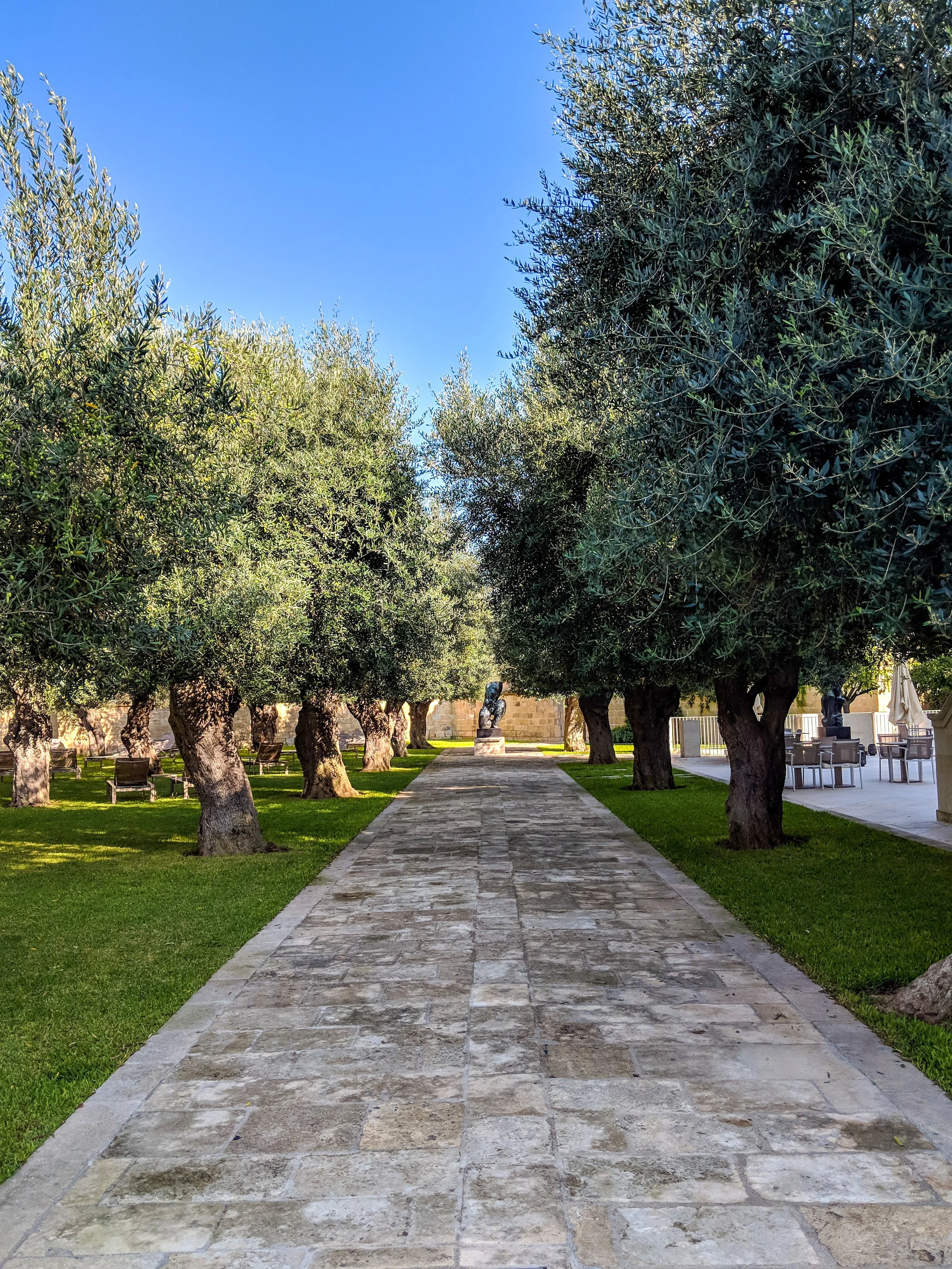
La Fiermontina
Founded by siblings Antonia Yasmina and Fouad Giacomo Filali in honor of their grandmother, Antonia Fiermonte, an Apulian artist and muse who moved to 1930s Paris, the property bridges two worlds. Throughout the 17th-century masseria, soaring star-vaulted ceilings carved from honey-hued pietra leccese frame an extraordinary private art collection, showcasing original sculptures and works by French masters René Letourneur and Jacques Zwobada alongside pieces by Le Corbusier.
The Urban Oasis: Stepping outside reveals an olive and citrus grove centered around a private swimming pool, offering calm after exploring the Baroque streets of Lecce.
Sensory Dining at Zéphyr: Evenings begin beneath the olive trees with light Mediterranean plates celebrating Salento produce—fresh seafood, hand-rolled pasta, and local olive oil.
The Family Dimension: While the setting has the polish of a high-design gallery, the warmth of the staff and generous garden layouts create an effortless base for introducing children to art and history in an open environment.
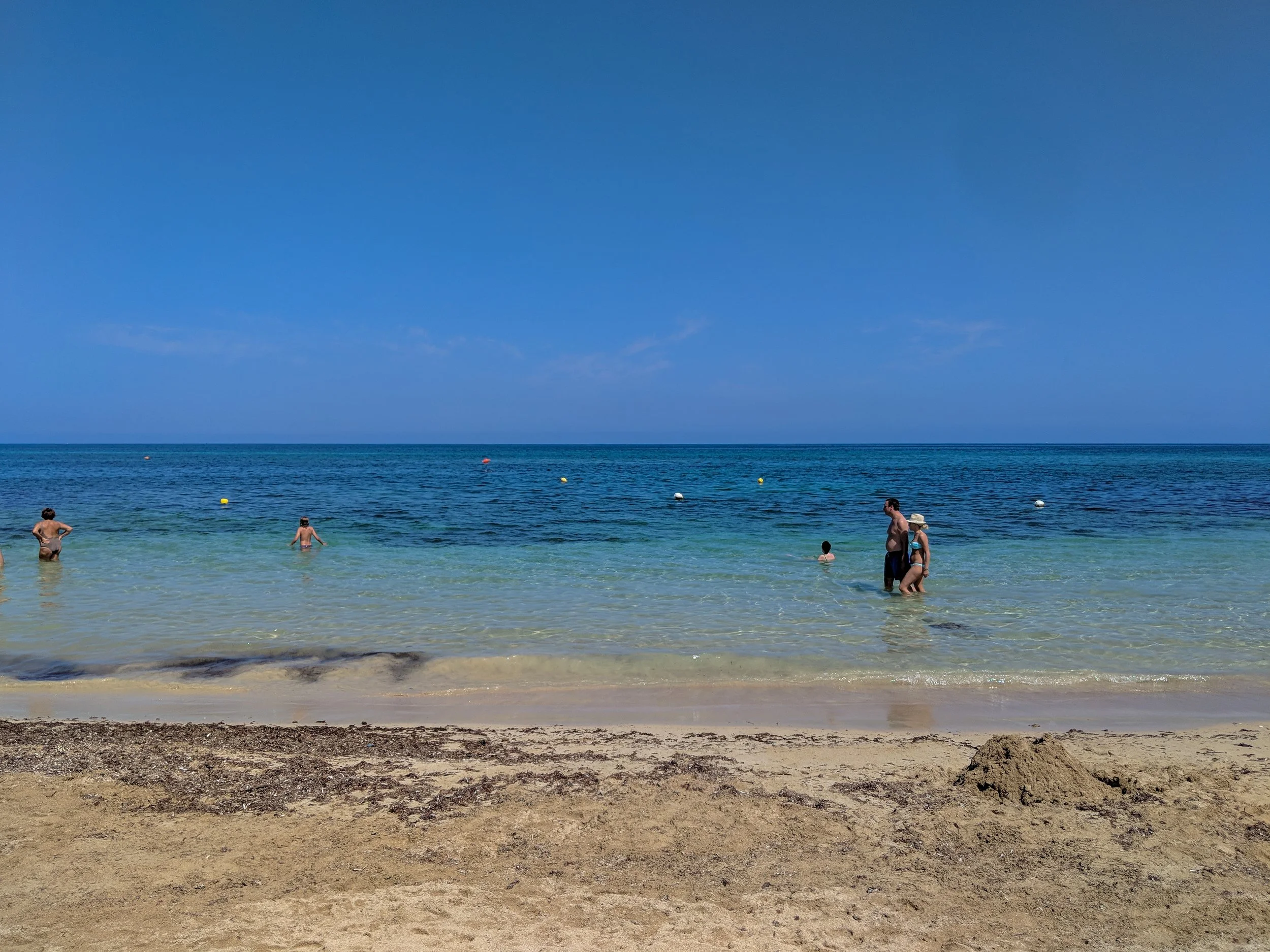
From here you can explore nearby locations like Galipoli and Solento or The Abbey of Santa Maria di Cerrate which is a 12th-century Romanesque and Byzantine-rite monastic complex located in the countryside between Lecce and Squinzano in Puglia, Italy. While we stayed here we did one day trip to Spiaggia Libera and spent the day inLe Cinque Vele Beach Club, which holds a premium location on the beach and is the perfect place to spend the day on the beach, the food there is also pretty good!
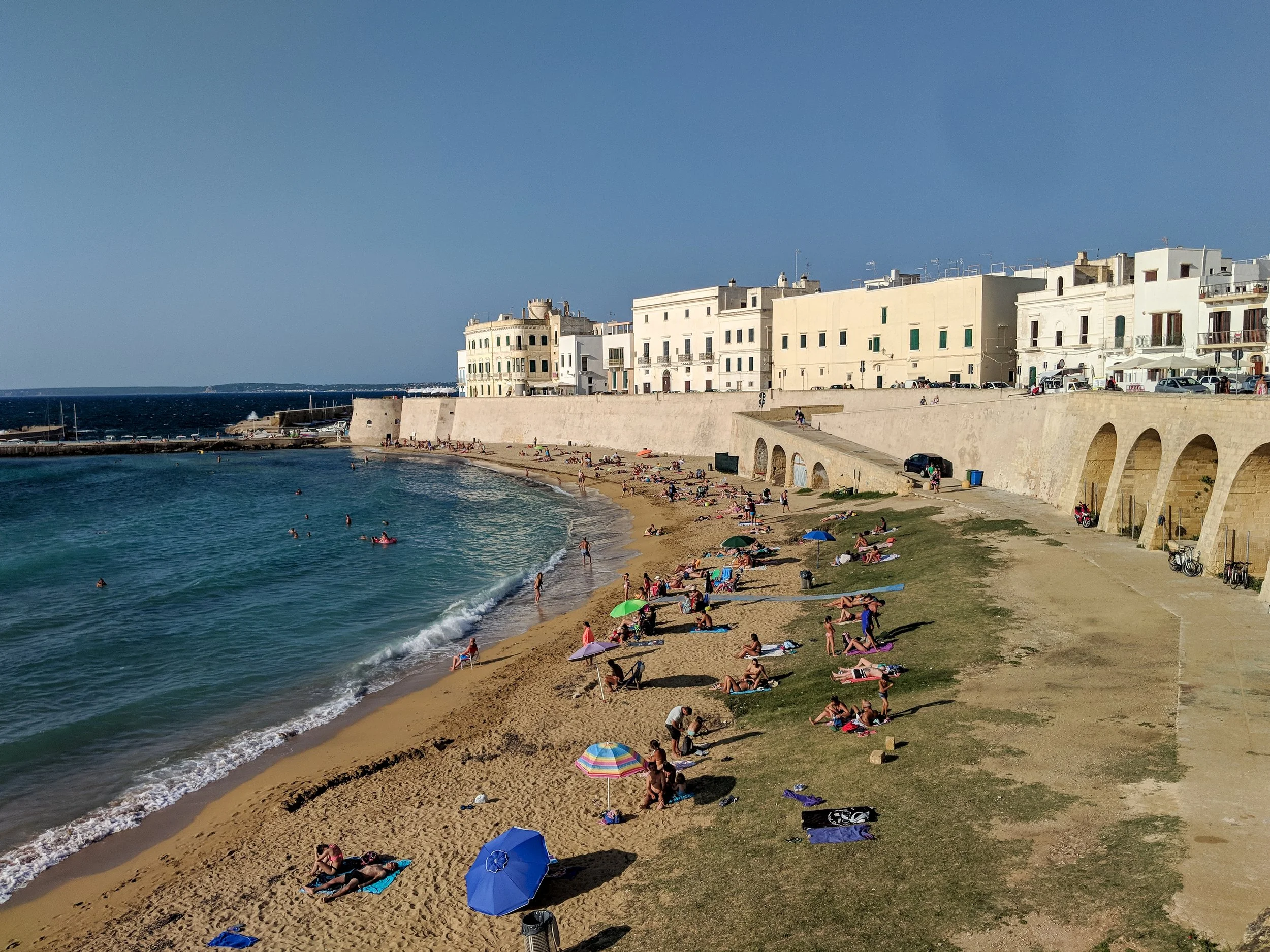
On the second day we drove to Galipoli where you can start by crossing over the bridge past the ancient fountain to check out the castle and watch fishermen sorting nets at the old harbor.
From there take a stroll through the historic backstreets and admire the ornate baroque balconies, pop into Sant’Agata Cathedral, and grab some freshly fried seafood for lunch.
In the afternoon, do the easy walk along the ancient sea walls and head down to Purità beach for a quick break by the water and pop into Vecchio Ingrossofor a pasticcioto which is a buttery crust filled with either custard or ricotta, or if you’re lucky, nutella!
Borgo Egnazia
Borgo Egnazia
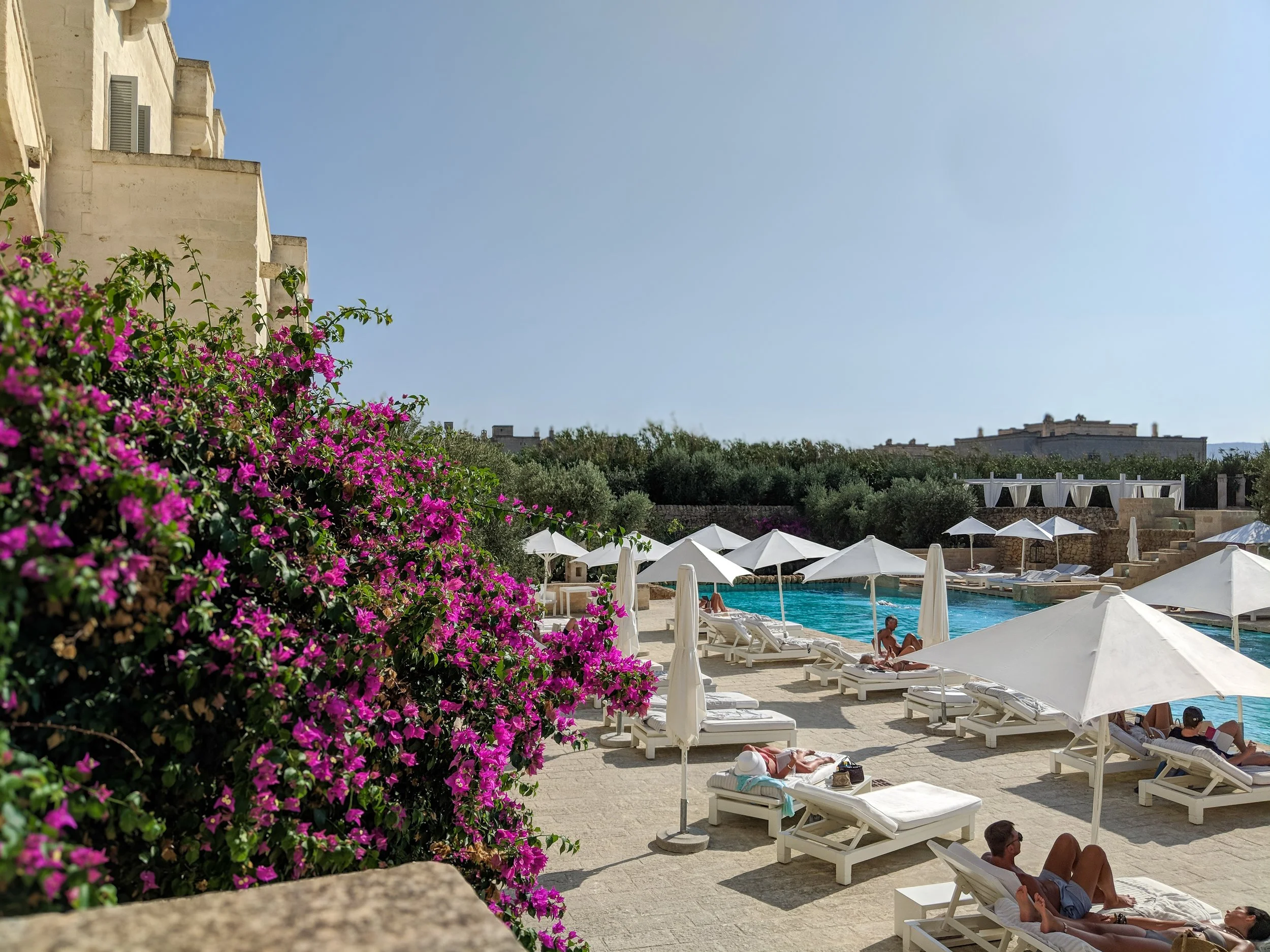
For the last 3 days we drove back towards Brindisi for a stay at Borgo Egnazia which felt like being welcomed into an Apulian village sculpted entirely from local tufo limestone. Days here slip by between quiet strolls through bougainvillea-draped stone alleyways, afternoons by the sun-drenched pool, and farm-to-table feasts featuring the region’s freshest burrata, handmade orecchiette, and golden olive oil. Whether you're unwinding at the candlelit Vair Spa or watching the golden hour light bathe the central piazza before an open-air village festa, every detail balances rustic Italian soul with world-class, understated elegance. I would say the only negative is the “beach” as not a real beach but a sort of beach club set up by the hotel on a rocky alcove only accessible by golf carts.
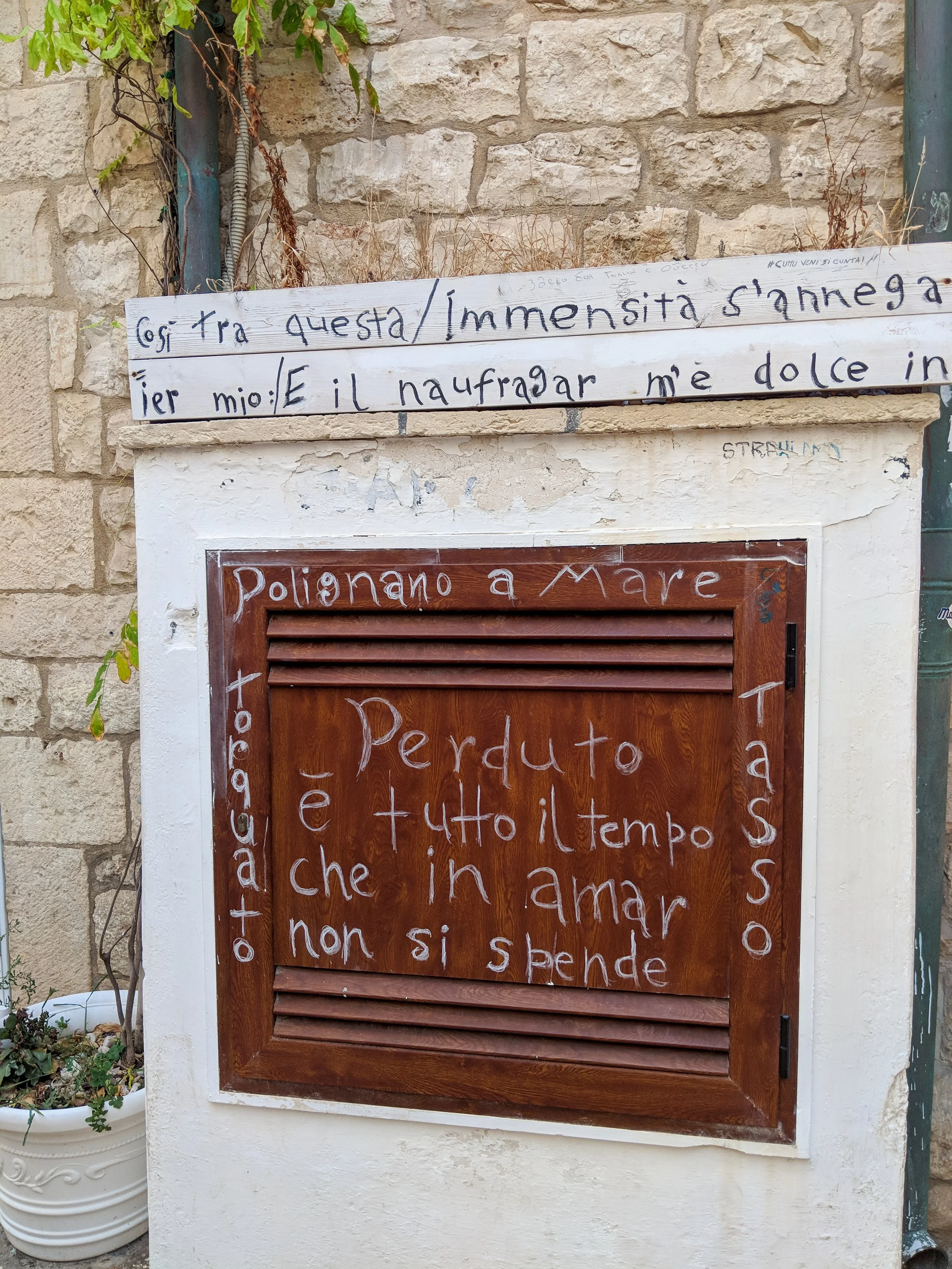
From here you can spend a day visiting Polignano a Mare. Although a lot busier than other smaller villages around and perched dramatically atop limestone cliffs carved by the Adriatic Sea, Polignano a Mare offers one of Puglia’s most striking coastal vistas. A short stop invites you to wander through the arched stone gateway of the centro storico, where whitewashed alleys open suddenly onto cliffside terraces overlooking the turquoise cove of Lama Monachile. Grab an artisanal gelato or an espresso, take in the sound of crashing waves against sea caves below, and watch cliff divers plunge into the crystal-clear water before heading to your next stop along the coast. Definitely worth the stop for the pictures alone.
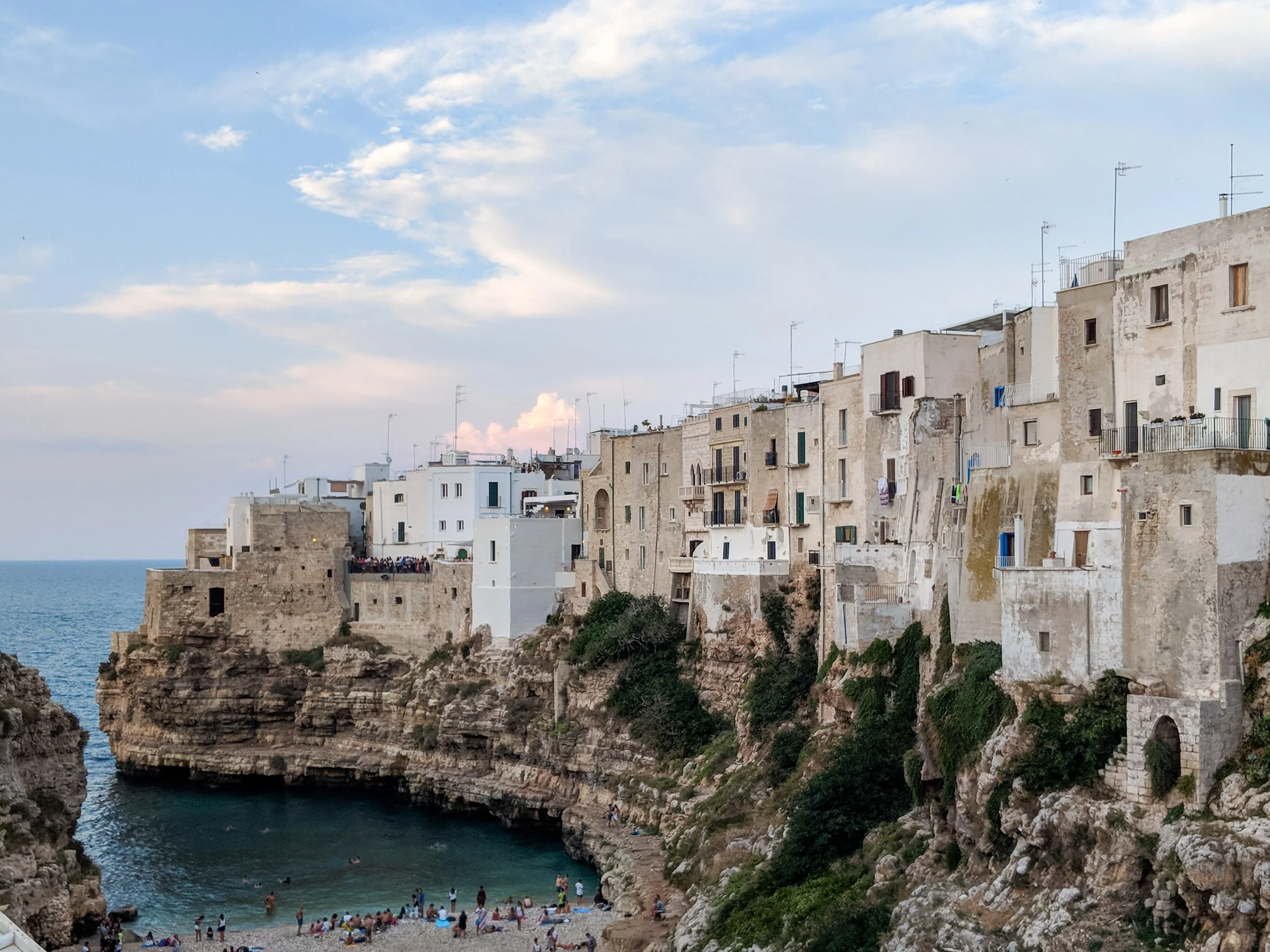
Polignano a Mare
Another heavily touristic town to visit from this base is Alberobello which is the classic picture of Apulia with over a thousand conical, dry-stone dwellings known as trulli. A quick visit is best spent strolling through the quieter lanes of Rione Aia Piccola, away from the souvenir shops of Monti, where you can admire the intricate limestone masonry and mysterious painted symbols on the roofs. Duck inside an artisan workshop to see how these mortarless structures have stood for centuries, sample local almond pastries from a family bakery, and head up to the Belvedere Santa Lucia terrace for a panoramic view across this UNESCO-listed fairytale landscape.
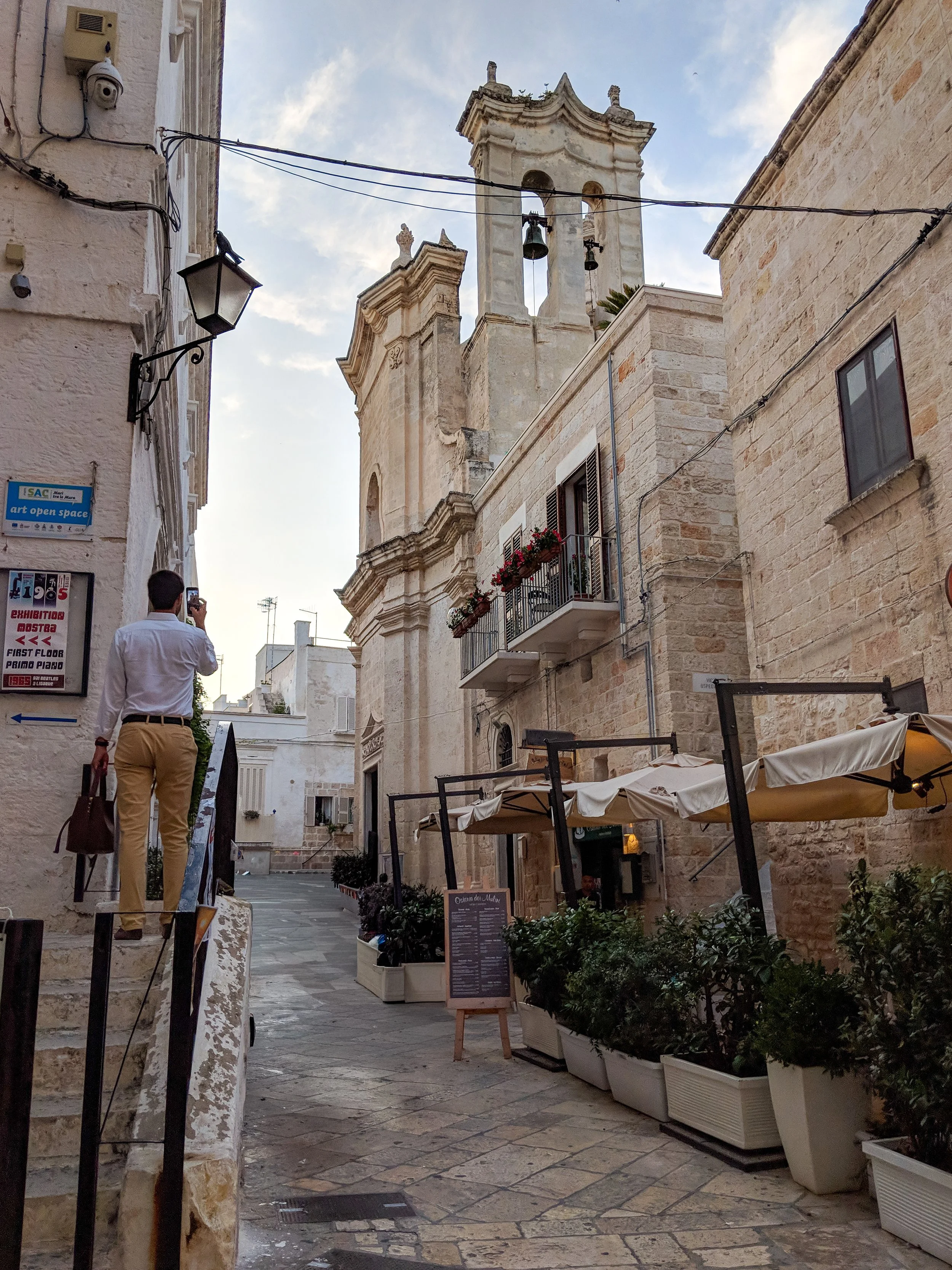
Polignano a Mare
Restaurants
Ostuni
Masseria Il Frantoio: Historic 16th-century fortified farmhouse serving multi-course, farm-to-table tasting menus deeply rooted in their organic estate-grown produce and artisanal olive oils.
Taverna della Gelosia: Romantic, multi-tiered terrace restaurant nestled in the whitewashed alleys of the historic center, delivering refined takes on traditional Puglian classics.
Acquasanta Dispensa e Vino: Intimate, stylish wine bar and gourmet pantry spotlighting exceptional regional labels paired with high-quality cured meats, local cheeses, and small plates.
Moroseta Kitchen: Design-led culinary destination at Masseria Moroseta offering innovative, ingredient-driven seasonal tasting menus in a sleek, minimalist countryside setting.
Savelletri
Pescheria 2 Mari: Vibrant, harborside seafood spot and fishmonger where you select your raw fish and crustaceans directly from the counter for raw crudo or simple grilling.
Lecce
Le Zie Trattoria: Iconic, home-style trattoria run with grandmotherly warmth, serving legendary Salento comfort foods like ciceri e tria (chickpea pasta) behind a ring-at-the-door entrance.
Mariaparadiso Tucked away in a charming, quiet piazza in the historic center, this intimate, candlelit gem blends Salento culinary tradition with refined Italian influences, making it an ideal spot for an atmospheric evening aperitivo or a relaxed, thoughtful dinner away from the crowds.
Fasano
Ristorante da Silve: Authentic, rustic countryside eatery celebrated for generous portions of handmade pasta, grilled local meats, and time-honored Apulian home cooking.
Gallipoli
Il Bastione: Upscale seafood restaurant set along the ancient fortress ramparts of the old town, boasting sweeping Ionian sea vistas and refined coastal cuisine.
Salento
Locanda del Levante: Cozy, welcoming village tavern celebrating genuine Salento flavors with fresh local ingredients, house-made pastas, and regional wines.
Belami (Bel Ami): Refined restaurant set inside a restored 19th-century historic palazzo with an intimate garden courtyard, renowned for contemporary Mediterranean gastronomy and fresh local seafood.